
The Next Corporate Monopoly, the Market Made World Order, and Africanphobia in South Africa
This article argues that the rise of the next corporate monopoly, the architecture of the Market‑Made World Order, and the persistence of Africanphobia in South Africa together form a single structural system in which global capital shapes domestic governance, political vulnerability fuels social division, and xenophobia becomes an instrumental tool for managing the pressures of inequality.
GEOPOLITICAL ECONOMYSOUTH AFRICAN POLITICAL ECONOMYAFRICAN CONTINENTAL AFFAIRS
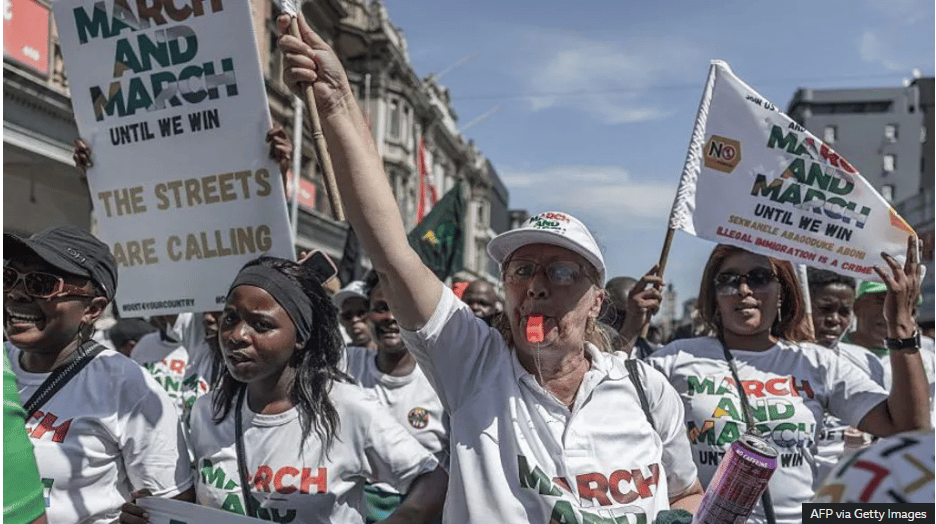
The early twenty‑first century is marked by a profound reconfiguration of global power: markets have surpassed states as the primary architects of order, corporations have evolved into quasi‑sovereign actors, and societies at the periphery of global capital are experiencing new forms of social fracture. Within this shifting landscape, three forces — the rise of the next corporate monopoly, the consolidation of the Market‑Made World Order (MMWO), and the intensification of Africanphobia in South Africa — reveal themselves not as isolated phenomena, but as interconnected expressions of a deeper structural transformation.
The emergence of the next corporate monopoly is not merely a story of business expansion; it is the geopolitical ascent of firms whose scale, data dominance, and supply‑chain control now rival the capacities of nation‑states. These entities shape labor markets, influence political decision‑making, and define the terms of global competition. Their rise signals a world in which sovereignty is increasingly negotiated through capital flows rather than constitutional authority. This evolution aligns with the logic of the MMWO — a world order in which markets, not governments, set the tempo of international relations. In this paradigm, states become instruments of competitiveness, compelled to align domestic policy with the imperatives of global capital. The consequences are most visible in countries positioned as continental gateways, such as South Africa, where the demands of global investors collide with unresolved historical inequalities.
It is within this tension that Africanphobia — the targeted hostility toward African migrants — has taken root and intensified. Far from being a spontaneous social pathology, Africanphobia functions as a political and economic release valve. It redirects public frustration away from structural failures and toward vulnerable communities, while simultaneously protecting entrenched interests within the corporate and political elite. In this sense, Africanphobia is not simply a social crisis; it is a governance mechanism within a market‑driven order. In other words, the violence witnessed in South Africa, the consolidation of corporate power, and the architecture of the MMWO are part of the same geopolitical equation. They reflect a world in which markets shape identities, monopolies shape politics, and social tensions become instruments of economic management. Understanding their convergence is essential for any serious attempt to interpret the future of African political economies — and the future of global order itself.
In this configuration, the “next corporate monopoly” is not a single dominant company but the systemic dominance of global capital over domestic political economies, a structural condition in which markets dictate national priorities and corporate power shapes the boundaries of governance. South Africa exemplifies this reality: deeply integrated into global capital flows, anchored by the Johannesburg Stock Exchange, and pressured to satisfy international investors while confronting profound domestic inequality. It stands as a textbook case of how corporate concentration, market‑driven governance, and geoeconomic positioning converge to produce a political economy where sovereignty is negotiated through capital — and where social tensions, including Africanphobia, become instruments for managing the contradictions of this order.
How the “Next Corporate Monopoly” Emerges in a Market‑Made World Order
Global corporate concentration is accelerating, and within the Market‑Made World Order (MMWO) — a framework that treats markets as the primary architects of global order — monopolies are not anomalies but structural outcomes of how contemporary capitalism organizes power. Corporate concentration intensifies as multinationals consolidate supply chains, data infrastructures, logistics networks, and financial systems, forming quasi‑sovereign corporate blocs whose influence rivals that of states. Through Market‑Made governance, states increasingly orient their policies toward market incentives rather than public mandates, prioritizing investor confidence, regulatory predictability, and competitiveness over redistribution or social transformation. This dynamic produces a geoeconomic hierarchy in which certain countries — notably those positioned as continental “market nodes,” such as South Africa — become enforcement zones for global capital, tasked with maintaining stability, labor discipline, and investment‑friendly conditions.
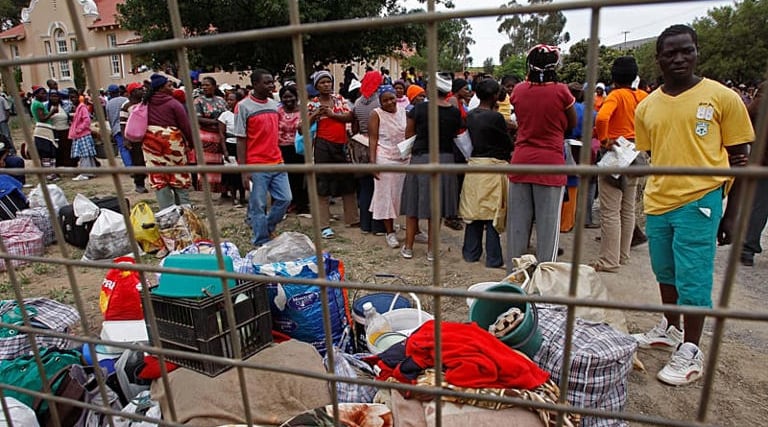
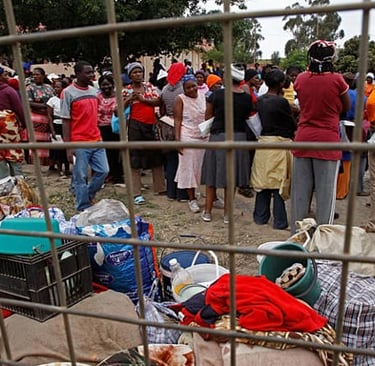
''This tension is documented in analyses of corporate power and race in South Africa’s elite and in reporting on global capital’s role in sustaining inequality and social fragmentation'', according to thepanafrikanist.comthepanafrikanist.com. The Pan Afrikanist.
South Africa: Corporate Epicenter of the Continent
South Africa’s economy is structurally tied to global capital flows, and the Johannesburg Stock Exchange (JSE) functions as the continent’s premier corporate hub, channeling multinational investment across mining, retail, energy, and telecommunications. This position embeds South Africa deeply within the logic of global markets, creating a dual and often contradictory pressure on the state: it must consistently serve global investors, ensuring regulatory predictability, labor stability, and macroeconomic discipline, while at the same time addressing the profound inequalities inherited from apartheid, including mass unemployment, spatial exclusion, and racialized economic disparities. This tension defines the country’s political economy — a constant negotiation between the demands of international capital and the urgent need for domestic transformation — and shapes many of the social and political dynamics that follow.
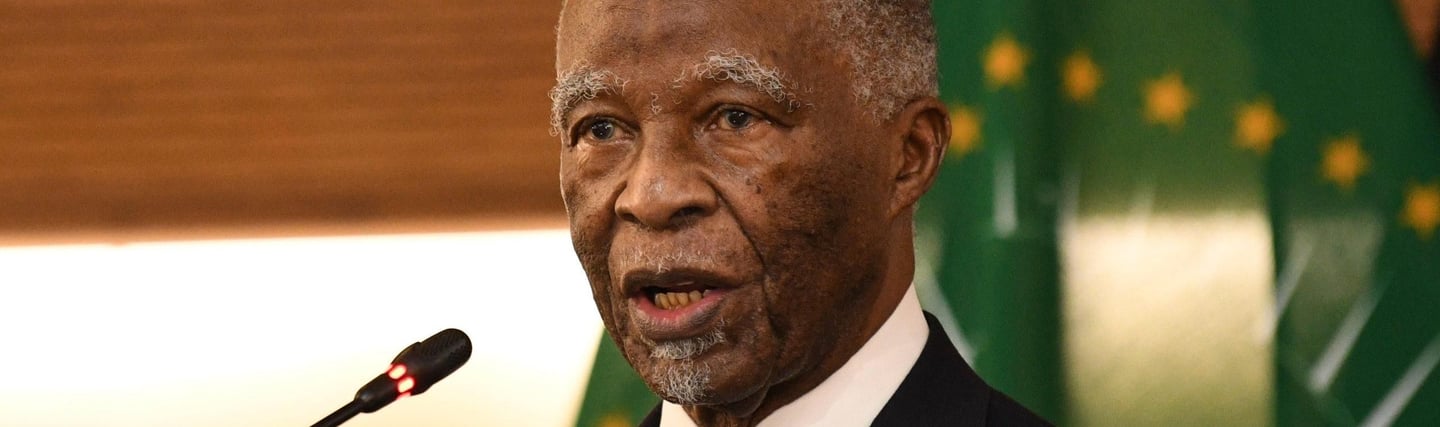
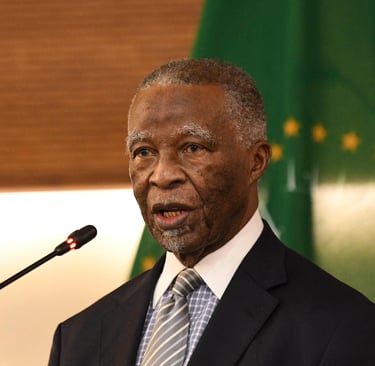
Rather than emerging spontaneously, it is sustained by coordinated actors who mobilize communities, shape exclusionary narratives, and channel public frustration toward migrants. Its persistence reflects underlying structural pressures — economic competition, political deflection, and social insecurity — making Africanphobia a strategic and instrumental mechanism of control within a market‑driven order.
Economic Logic of Violence: Foreign‑owned shops often operate with lower margins and tighter supply chains. When xenophobic violence erupts, these shops are destroyed, eliminating competition and allowing local traders to raise prices. Violence becomes a market‑correction mechanism enforced through intimidation rather than regulation.
Political Weaponization: Xenophobic violence spikes during election cycles (2008, 2015, 2019, 2026). Political actors use scapegoating to redirect public anger away from governance failures. This is a strategic political economy, not random unrest.
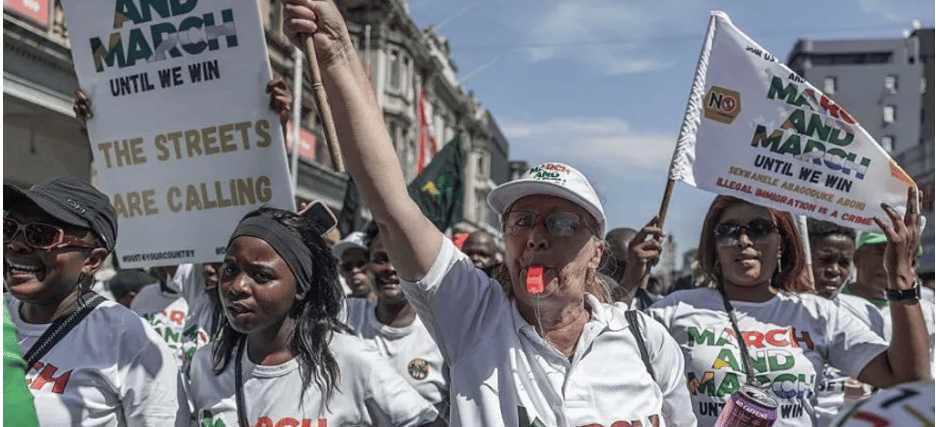
Normalization of Anti‑African Narratives: Movements like Operation Dudula and March and March act as parallel authorities, regulating informal labor markets and enforcing exclusion. Their rise reflects a broader normalization of anti‑foreigner rhetoric.
Africanphobia: The Social Release Valve of Structural Pressure
Africanphobia is a targeted form of xenophobia against African migrants in South Africa, characterized by its organized nature, predictable recurrence, and functional role within local political and economic systems.
How MMWO Explains Africanphobia
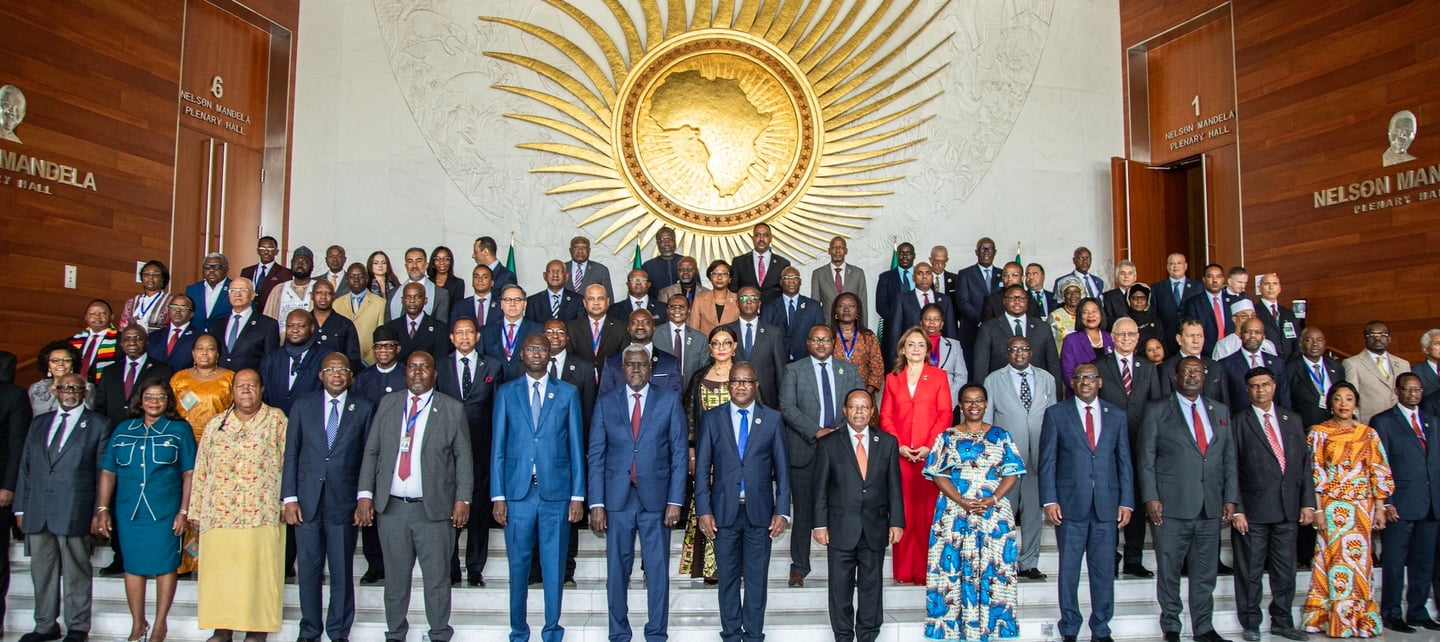
Under the Market‑Made World Order, xenophobia in South Africa operates as a deliberate governance instrument shaped by the structural imperatives of global capital and the political constraints of domestic elites. In an economy deeply integrated into international markets, global capital demands stability, predictable labor conditions, and the preservation of low‑cost workforce structures. Domestic elites, positioned between these external pressures and an increasingly frustrated population, must maintain social order without undertaking the kind of wealth redistribution that would threaten entrenched interests or unsettle investor confidence. Unable or unwilling to confront the structural roots of inequality — unemployment, spatial exclusion, and the enduring economic architecture of apartheid — political actors redirect public anger laterally, toward African migrants, rather than upward toward the state or the corporate monopolies that shape the country’s economic destiny.
This dynamic produces a triangular system of governance: corporate monopolies generate structural inequality; structural inequality produces political vulnerability; and political vulnerability is managed through the weaponization of xenophobia. In this configuration, Africanphobia becomes not merely a social pathology but a functional tool — a mechanism through which elites deflect accountability, preserve economic hierarchies, and stabilize a market‑driven order that privileges capital over citizenship.
Conclusion
The convergence of the next corporate monopoly, the Market‑Made World Order, and Africanphobia in South Africa exposes a deeper structural truth about the contemporary global system: power is no longer negotiated solely through political institutions, but through the expanding architecture of markets, capital flows, and social narratives that shape public life. As corporate actors consolidate unprecedented influence, they redefine the boundaries of sovereignty and reorder the priorities of states. In parallel, the MMWO transforms governance into an exercise in competitiveness, compelling nations to align their domestic agendas with the imperatives of global capital rather than the aspirations of their citizens.
South Africa stands at the center of this transformation. As a continental gateway for investment and a symbolic anchor of African modernity, it carries the weight of global expectations while still confronting the unresolved legacies of apartheid, inequality, and economic exclusion. In this environment, Africanphobia emerges not as a spontaneous social rupture but as a predictable byproduct of structural tension — a mechanism through which political actors deflect accountability, economic interests protect entrenched advantages, and communities channel frustration toward vulnerable populations rather than toward the systems that produce their hardship.
Understanding this dynamic is essential. Africanphobia is not merely a social crisis; it is a symptom of a broader geopolitical economy in which markets shape identities, monopolies shape political choices, and social divisions become instruments of governance. The violence directed at African migrants reflects a deeper anxiety about economic precarity, national identity, and the perceived erosion of sovereignty in a world increasingly governed by market logic. It also reveals how easily social narratives can be weaponized when institutions lack the capacity — or the will — to confront structural inequality.
The rise of corporate monopolies, the logic of the MMWO, and the persistence of Africanphobia therefore form a single continuum. They illustrate how large monopolies can influence domestic instability, how political actors can manipulate social tensions to maintain power and relevance, and how societies at the periphery of global markets absorb the shock of a rapidly changing world order. Addressing these challenges requires more than policy reform; it demands a reimagining of governance itself — one that places human dignity above market efficiency, regional solidarity above manufactured division, and structural justice above short‑term political expediency.
In the end, the future of African political economies will depend on their ability to navigate this new landscape with clarity, courage, and strategic foresight. Recognizing the interconnected nature of these forces is the first step toward building a more stable, equitable, and sovereign continental order — one capable of resisting the pressures of global monopolies, transcending the constraints of market‑driven governance, and dismantling the social fractures that undermine collective progress.